IMPACTThe change catalyst
Change that leaves a mark.
We move beyond awareness into action, behaviour change and measurable outcomes.
We move beyond awareness into action, behaviour change and measurable outcomes.
Beyond optics.Into impact.
We bring strategy, storytelling and partnerships together to build interventions that move people, shift behaviour and leave evidence behind.


When we talk about the impact of a scholarship, it is easy to start with the numbers.
How much was awarded. How many students were supported. How many lives were reached.
Those numbers matter. They tell us about scale. But they don’t always tell us what change looks like for the person experiencing it.
For Victor Akinlade, recipient of The Special Foundation’s Special Scholarship, it meant having the space to focus on his education, pursue his goals and approach the future with renewed hope.
His story brought the numbers to life.
It reminded us of something fundamental about impact storytelling: behind every number is a person, and sometimes the most powerful way to show what changed is to let that person tell us.
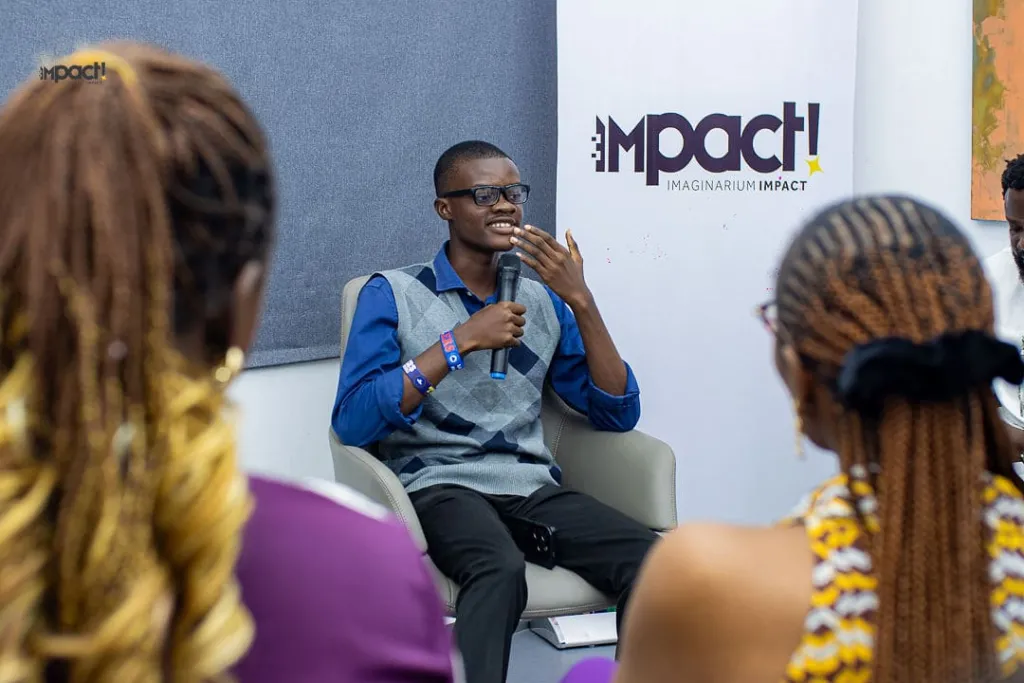
That idea was at the heart of Imaginarium Impact’s Stories That Shift Systems Media Mixer, held in Lagos on 28 August. The evening brought together journalists, editors, communications professionals and development practitioners to explore what makes a story powerful enough to move beyond informing an audience and shift how people think.
Beyond the Pitch
The fireside chat with Adedoyin Jaiyesimi, moderated by Dorcas Bello, moved quickly beyond the mechanics of getting a story published and towards something more fundamental: relationships.
The relationship between journalists and communicators cannot begin and end with a press release.
Communicators need to understand what makes a story useful to a newsroom. Journalists need access to the people, context and evidence behind the work. Both sides benefit when trust exists before there is a pitch.
It means creating spaces to meet, listen and understand each other’s work.
It means being friends beyond the pitch.
Because better relationships can lead to better questions, better access and ultimately, better stories.
From Numbers to People
Victor’s story also brought home why human stories matter.
A number can tell us what happened without helping us understand why it matters. A person can.
The numbers still matter. They provide evidence of scale and progress. But instead of making the numbers the story, perhaps we need to let the numbers tell a story.
Who is behind the statistic?
What changed for them?
What became possible?
Sometimes, the answer lies in the details that make an audience see themselves in someone else’s experience.
For young people especially, seeing people who look like them build, lead and succeed can expand their sense of what is possible.
Sometimes, a story does more than inform. It gives someone permission to
imagine a different future.
The Right Story for the Right Audience
We also need to ask whether we are telling the right story to the right audience.
A journalist, policymaker, donor or young person may each need a different entry point into the same issue.
Good communication requires knowing what the story is, who needs to hear it and why it should matter to them.
Not every organisational update is newsworthy. Not every programme milestone needs a press release.
Sometimes, the work is in finding the human story underneath the announcement.
What Happens Next?
Perhaps the clearest message from the evening was that people want more spaces like this.
Not simply more events, but more opportunities to build relationships, exchange ideas and create better stories together.
The mixer was a starting point.
Because if stories have the power to shift systems, then the relationships between the people who find, shape and tell those stories matter too.
Our challenge is to tell fewer stories that simply announce and more stories that people remember.
Stories that make people feel.
Stories that help them see themselves.
Stories that change what they believe is possible.
Because sometimes, shifting a system starts with shifting the way we tell the story.
Tell us about the change you want to create.